A Land Between Empires
What you'll learnUnderstand the geopolitical setting of 6th-century Arabia between Byzantium and Persia.
A Land of Contrasts
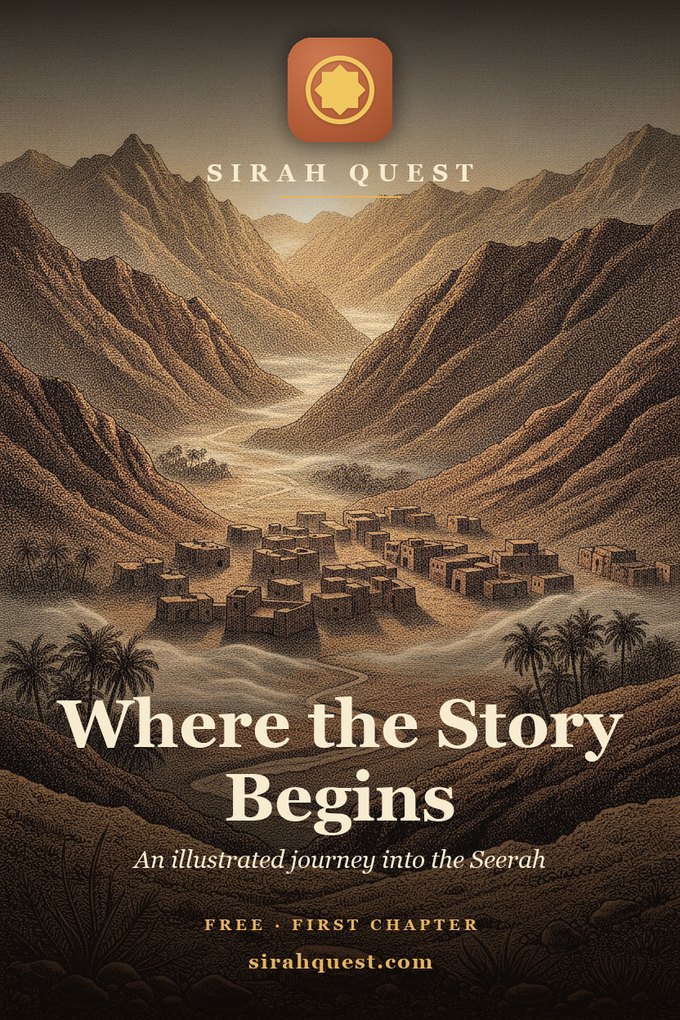
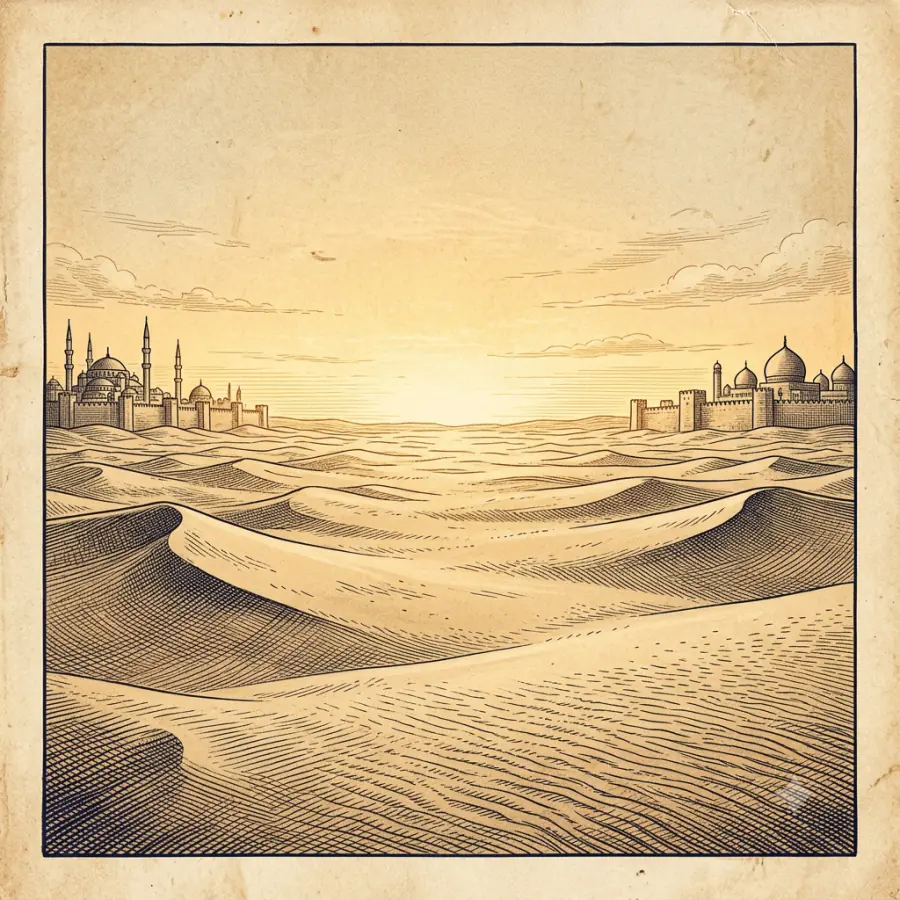
What was Arabia like the year before the Prophet ﷺ was born? Picture a vast desert wedged between two exhausted superpowers — and a small, overlooked trading town that was about to change the world. Let's set the scene.
Check your understandingQuestion 1 of 1
Which two empires dominated the world surrounding the Arabian Peninsula in the 6th century?
Makkah & the Ka'bah
What you'll learnLearn how Makkah became a thriving hub of commerce and pilgrimage, centred on the Ka'bah built by Ibrahim and Ismail.
Makkah: Crossroads of Commerce
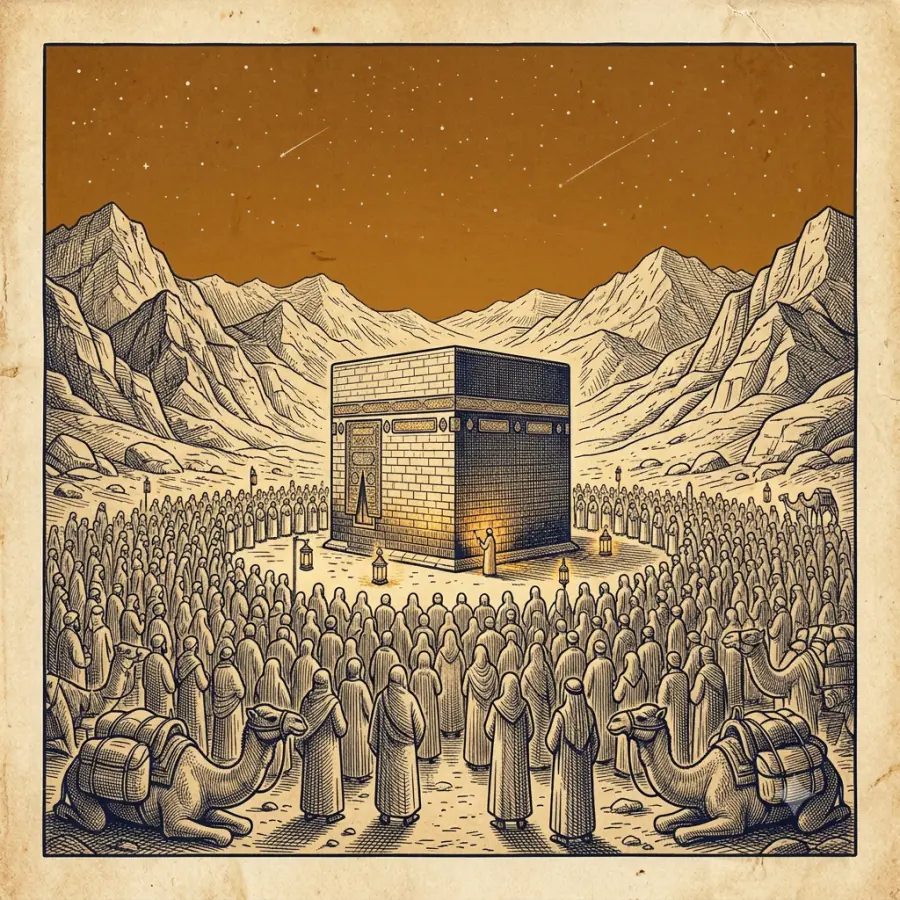
Makkah owed its prominence not to fertile land or abundant water — it had neither. The city sat in a barren, rocky valley, surrounded by harsh desert mountains. The Quran describes it as a valley 'without cultivation' (14:37). Yet Makkah thrived, and it thrived for two reasons: the Ka'bah and trade.
Check your understandingQuestion 1 of 3
What was Makkah's primary role in 6th century Arabia?
Check your understandingQuestion 2 of 3
True or false?Makkah thrived economically because it was home to the Ka'bah and was located on major trade routes, despite being a barren valley without cultivation.
Check your understandingQuestion 3 of 3
Fill the gapThe Ka'bah was built by Prophet Ibrahim (AS) and his son blank as a house of worship for the One God.
Faith, Idols & the Hanifs
What you'll learnExplore the spiritual landscape of pre-Islamic Arabia: the spread of idolatry, the remnants of monotheism, and the Hanifs who searched for the truth.
The Religious Landscape
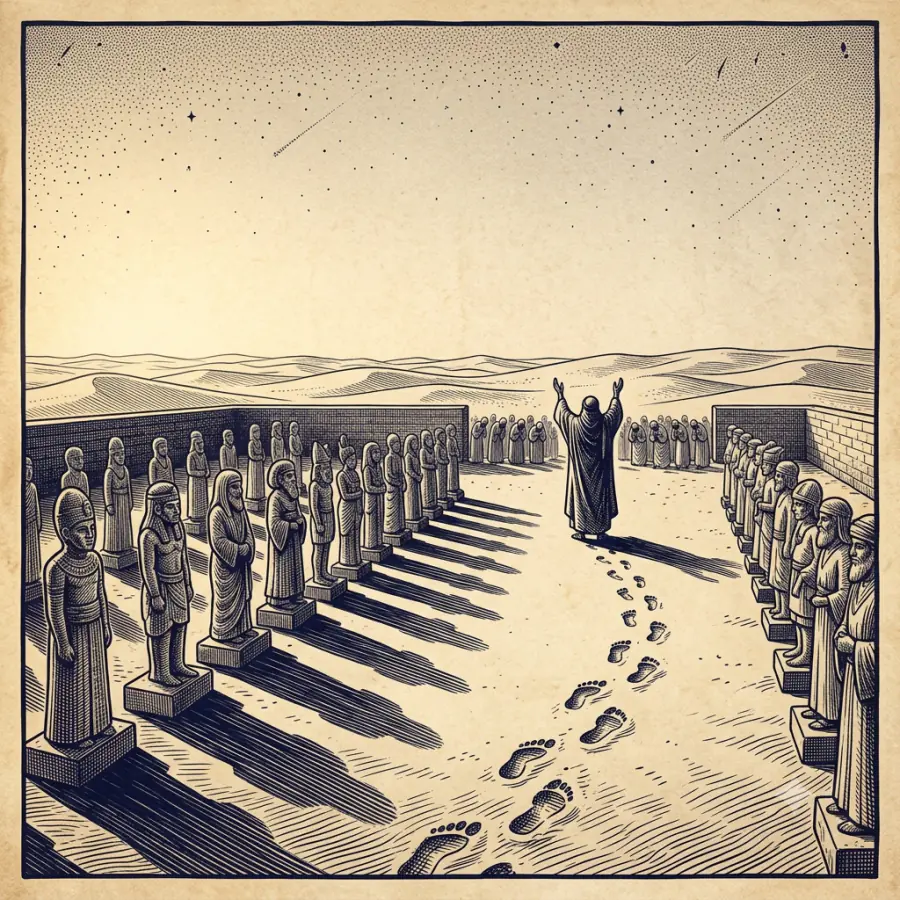
The spiritual condition of Arabia in the 6th century was one of deep confusion. The pure monotheism of Ibrahim (AS) — who had built the Ka'bah as a sanctuary for the worship of the One God — had been buried under layers of idolatry. According to tradition, the first man to introduce idol worship to the Ka'bah was Amr ibn Luhayy, a chief of the Khuza'ah tribe, who brought an idol called Hubal from Syria and placed it inside the sacred house. Over time, the number of idols grew until 360 of them surrounded the Ka'bah, one for nearly every day of the year.
Check your understandingQuestion 1 of 4
Who were the Hanifs in pre-Islamic Arabia?
Check your understandingQuestion 2 of 4
True or false?The Ka'bah in Makkah contained exactly 360 idols before the coming of Islam, representing the tribes of Arabia.
Check your understandingQuestion 3 of 4
According to tradition, who first introduced idol worship to the Ka'bah?
Check your understandingQuestion 4 of 4
What does Abdul-Muttalib's statement -- 'I am only the lord of the camels, and the House has a Lord who will protect it' -- reveal about pre-Islamic Makkah?
Arab Culture & Its Reform
What you'll learnRecognise the noble qualities of pre-Islamic Arab culture and understand why it was ripe for the transformative reform that Islam would bring.
Arab Culture: Poetry, Honor, and Hospitality
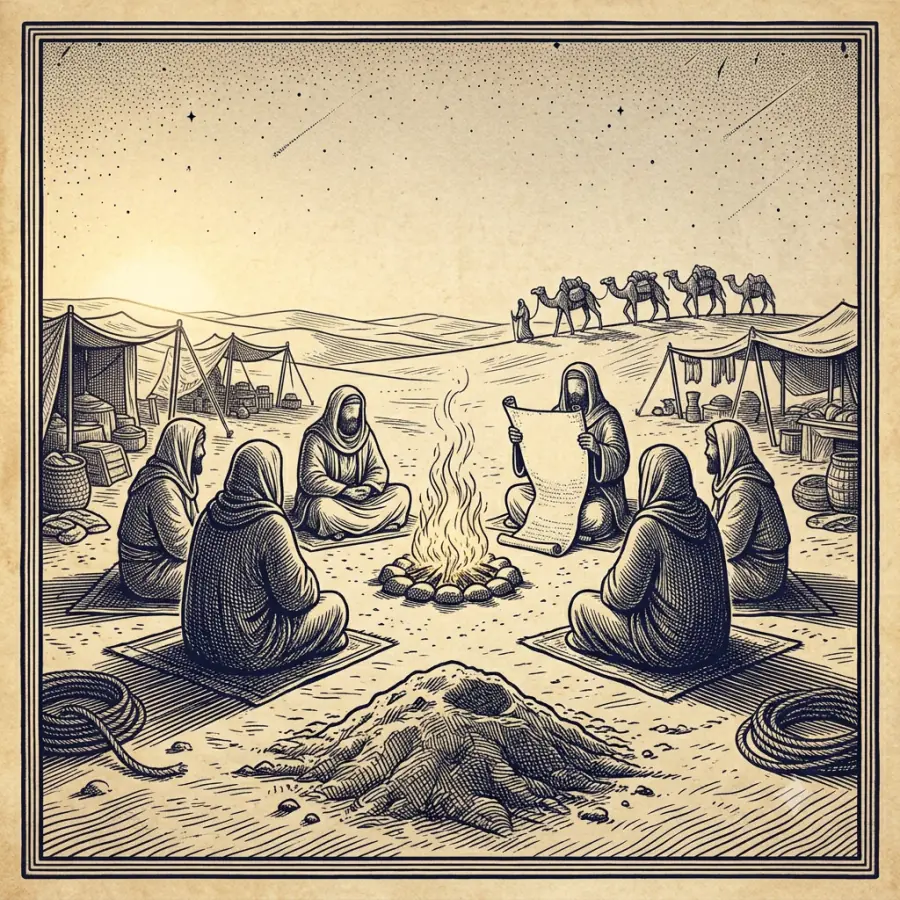
Despite the moral darkness that pervaded much of pre-Islamic Arabia — a period Muslims would later call the Jahiliyyah (Age of Ignorance) — the Arabs possessed remarkable qualities that would later serve as fertile ground for Islam. Chief among these was their mastery of the Arabic language. Poetry was not merely entertainment; it was the Arabs' newspaper, court of law, and historical archive all in one. A single poem could elevate a tribe's reputation or destroy an enemy's honor.
Check your understandingQuestion 1 of 2
What is the significance of Hashim ibn Abd Manaf in the history of Makkah?
Check your understandingQuestion 2 of 2
Fill the gapThe pre-Islamic period of ignorance in Arabia is known in Arabic as blank.
You've finished Chapter 1 of Sirah Quest.
That was one chapter of 78 — each with its own lessons, questions, narration and original art.
Continue the Journey in the App