
Sirah Stories · Shūrā
He Asked Their Opinion: The Prophet ﷺ and Shūrā
He received revelation from the heavens. He did not need a second opinion. And still, again and again, he turned to the people around him and asked: “What do you think?”
Sirah Stories · 26 July 2026
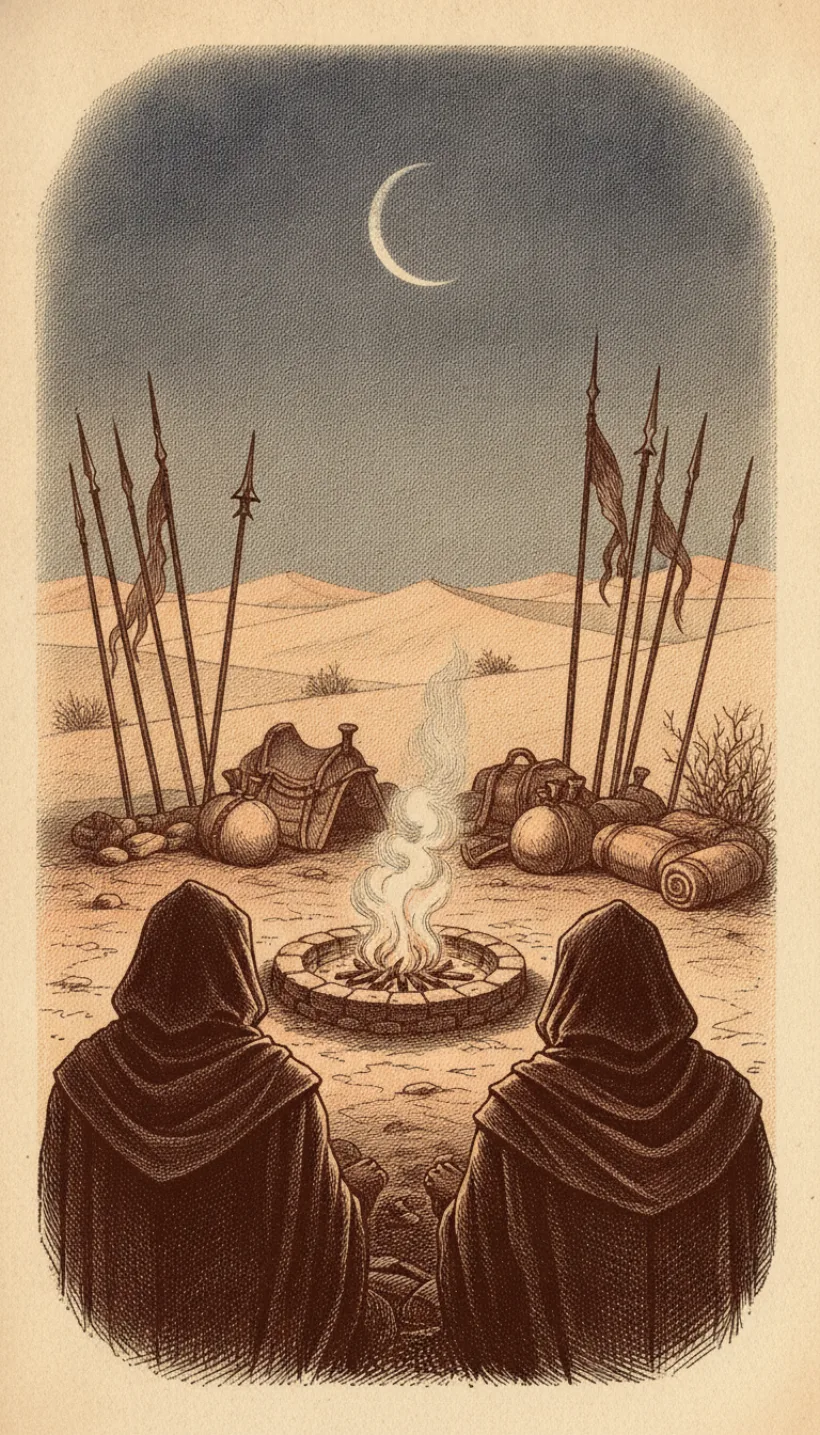
There is a question that costs a leader something to ask, because the answer might not be the one he wanted: “What do you think?” The Prophet Muhammad ﷺ asked it constantly — and he asked it at exactly the moments when a leader is most tempted to stop listening. The night before a battle. The week of a siege. The morning after a treaty nobody wanted to sign.
The Arabic word for that habit is shūrā: consultation. It is not a footnote in the Sirah. It is one of its running threads.
The Qur'an told him to ask
Shūrā was not a courtesy the companions invented around him. It was commanded. In Surah Al Imran the Prophet ﷺ is told: “…and consult them in the matter. Then when you have decided, put your trust in Allah” (Qur'an 3:159). And when the Qur'an describes the believing community itself, it names among its defining traits that “their affair is by consultation among themselves” (Qur'an 42:38).
Abu Hurayrah (ra) is reported to have said he never saw anyone consult his companions more than the Messenger of Allah ﷺ — a report preserved in Jami' at-Tirmidhi (1714), which its compiler graded hasan while noting a break in its chain.
Badr: an army moved because one man spoke up
The books of Sirah relate that as the Muslims took up position at Badr, a companion named al-Hubab ibn al-Mundhir (ra) came forward and asked, in effect: is this position something Allah has shown you, or is it judgement and strategy? Told that it was judgement, he proposed a different plan — advance to the nearest well, take the water, deny it to the other side. The army moved.
We tell this one as the Sirah tells it: it is a historical report, not a hadith of the sahih collections, and some scholars have graded its chain weak. But the pattern it describes is confirmed many times elsewhere.
The Trench: an idea from an outsider
When Madinah faced the confederate siege, Salman al-Farisi (ra) — a Persian among Arabs, a convert with no tribe behind him — suggested something no one in Arabia did: dig a trench across the exposed approach. The Sirah literature records that the suggestion was taken and the city dug. The siege broke without Madinah falling. The idea did not have to be Arab, or senior, or expected. It only had to be good.
Uhud: when he followed a view that was not his own
Before Uhud, the Prophet ﷺ favoured staying and defending Madinah from within. Many of the companions — especially the young men who had missed Badr — wanted to march out and meet the enemy in the open. He put the matter to them, and he went out with them. The Sirah and maghazi historians are clear that the day's decision was theirs, and he honoured it.
That is the hardest part of shūrā, and the part most often quietly skipped: consultation that is actually allowed to change the outcome.
Hudaybiyyah: the counsel that broke the deadlock
The best-attested moment is also the quietest. After the treaty of Hudaybiyyah, the companions were so heartsick at its terms that when the Prophet ﷺ told them to sacrifice their animals and shave their heads, no one moved. He went into the tent, distressed, and Umm Salamah (ra) counselled him: go out, say nothing to anyone, sacrifice your own camel, and call your barber. He did exactly that. When they saw it, they rose and did the same. This is recorded in Sahih al-Bukhari (2731–2732).
What shūrā actually teaches
Notice what it is not. It is not indecision — the same verse that commands consultation pairs it with resolve: consult them, then decide and trust Allah. And it is not a hunt for the most impressive voice in the room. The counsel that changed the day came from a soldier at Badr, a foreign convert at the Trench, the younger men at Uhud, and a wife inside a tent at Hudaybiyyah.
The best of creation asked ordinary people what they thought, and then made them feel heard. It is difficult to read that and keep the habit of never asking. See how the Hijra itself was run as a team operation →
Watch the 60-second story
Sources: The command to consult — Qur'an 3:159 and 42:38. The Prophet's ﷺ frequent consultation — Jami' at-Tirmidhi 1714 (its compiler graded it hasan and noted a broken chain; it is not in the two Sahihs). Umm Salamah's (ra) counsel at Hudaybiyyah — Sahih al-Bukhari 2731–2732. Al-Hubab at Badr, Salman al-Farisi's trench, and the decision to march out at Uhud — the Sirah and maghazi literature (Ibn Ishaq / Ibn Hisham, al-Tabari); these are historical reports rather than hadith of the sahih collections, and al-Hubab's report in particular has been graded weak by some. Honorifics: ﷺ “peace be upon him,” (ra) “may Allah be pleased with him/her.”
Learn the Sirah — a little every day
Badr, the Trench, Uhud and Hudaybiyyah are all chapters you'll walk through in Sirah Quest: 78 chapters, short daily lessons, in English, Arabic, and French. Free to start.