Sirah Stories · Uhud
Nusaybah bint Kaʿb (ra): The Shield of Uhud
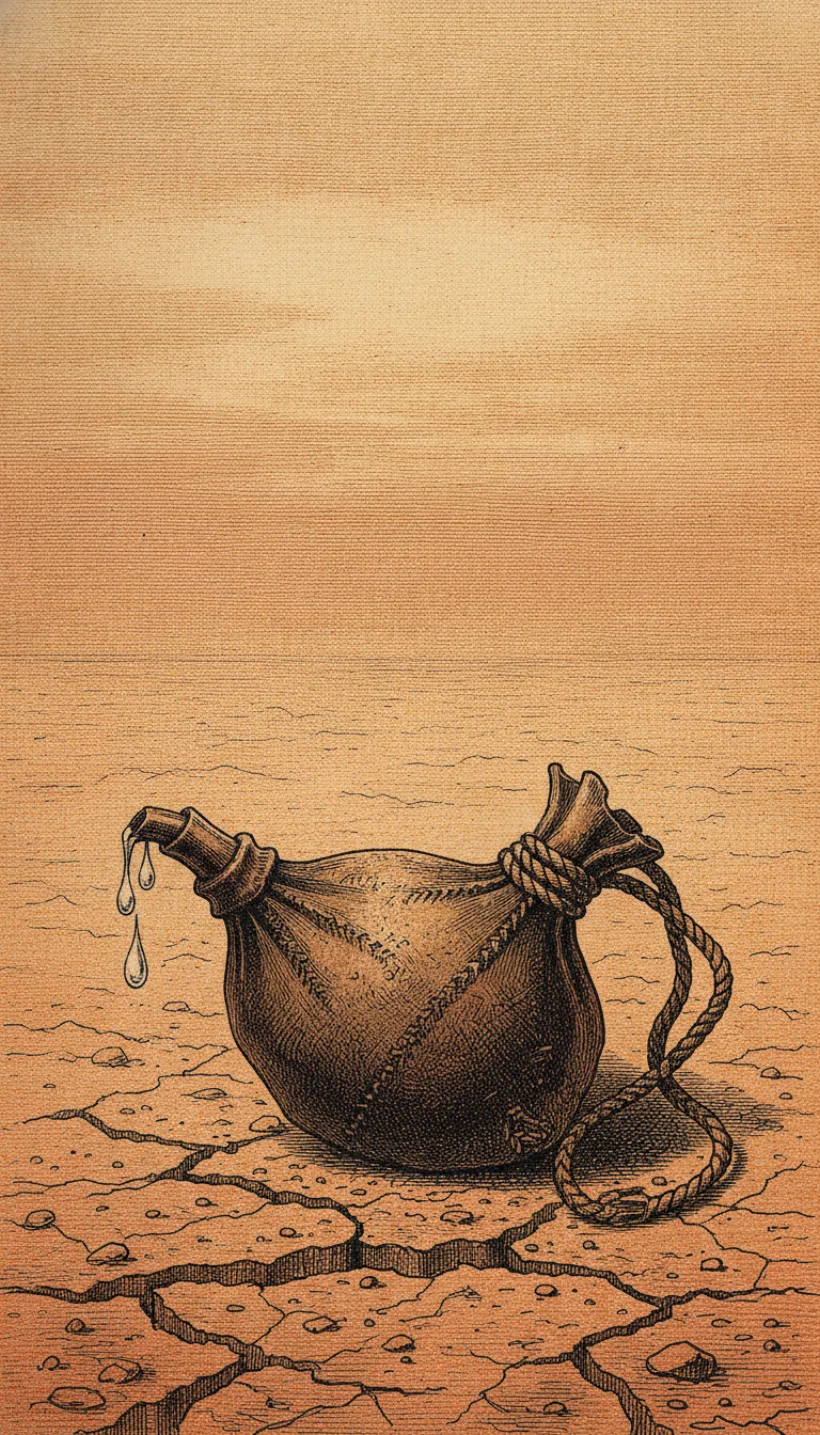
She walked onto the field at Uhud carrying a waterskin, to give the fighters to drink. By the end of the day she was one of the last people standing between the Prophet ﷺ and the enemy.
Sirah Stories · 26 July 2026
Nusaybah bint Kaʿb (ra) — better known by her kunya, Umm ʿUmarah — was a woman of the Anṣār of Madinah. The Sīrah literature places her at the second pledge of al-ʿAqaba, among the delegation from Madinah who pledged their loyalty to the Prophet ﷺ before the Hijra; she was one of only two women there.
A few years later she walked out to the slopes of Uhud, in the third year after the Hijra, with a waterskin over her shoulder. She had come to tend the wounded and give the fighters to drink.
The day the ranks broke
What happened at Uhud is preserved in the most rigorous sources. Sahih al-Bukhari 4064 records that when the day turned, the people left the Prophet ﷺ, and Abu Ṭalḥa (ra) stood in front of him shielding him with his leather shield, saying: “Let my father and mother be sacrificed for you — do not raise your head, lest an arrow strike you. My neck rather than your neck.” The same hadith describes women moving across the field with waterskins on their backs, emptying them into the mouths of the wounded, then returning to fill them again.
That is the scene Nusaybah was standing in when the line collapsed.
She put the water down
Her own part in the battle comes to us from the maghāzī and biographical literature — al-Wāqidī's Kitāb al-Maghāzī and Ibn Saʿd's Ṭabaqāt — not from the Ṣaḥīḥ collections. Those accounts relate that she set aside the waterskin, took up a sword and a shield, and placed herself in the path of the men coming for the Prophet ﷺ. Her husband and her two sons were in the field with her that day.
Al-Wāqidī counts a dozen wounds on her by the end of it — thrusts of the lance and strokes of the sword. The worst was a deep gash struck by Ibn Qamiʾa, one of the Quraysh, which the accounts say took roughly a year to heal. She did not step back.
The same literature preserves a testimony transmitted from ʿUmar ibn al-Khaṭṭāb (ra), who reported that the Prophet ﷺ said of that day:
We give this as the Sīrah gives it — a report from the historians, not a hadith of the two Ṣaḥīḥs. It is honestly attributed, and it does not need inflating.
She was not finished
Uhud was not her last battlefield. The biographical sources place her at al-Ḥudaybiyya, at Ḥunayn, and finally at al-Yamāma years later, in the caliphate of Abu Bakr (ra), where she fought against the army of Musaylama, lost a hand, and was carried off the field wounded again. Her son Ḥabīb was killed by Musaylama; her son ʿAbdullāh was among those present at his death.
Why her story matters
Nusaybah did not set out that morning to be a warrior. She set out to carry water. What made her remarkable was not a title she'd been handed but a decision she made in the fifteen seconds when the ranks broke and somebody had to stand there.
The Sīrah is full of women who show up in the record exactly like this — not as spectators to the men's history but inside it, at cost. Read about Asma bint Abi Bakr (ra), who held her silence under a blow →
Watch the 60-second story
Sources: The collapse of the ranks at Uhud, Abu Ṭalḥa shielding the Prophet ﷺ, and the women carrying waterskins across the field — Sahih al-Bukhari 4064 (see also 2880 and 3811); note that the women named in that hadith are ʿĀʾisha and Umm Sulaym (ra). Nusaybah's own fighting, her wounds, the blow from Ibn Qamiʾa, and the statement transmitted from ʿUmar ibn al-Khaṭṭāb (ra) — the maghāzī and biographical literature (al-Wāqidī, Kitāb al-Maghāzī; Ibn Saʿd, al-Ṭabaqāt al-Kubrā; Ibn Ḥajar, al-Iṣāba), not the Ṣaḥīḥ collections. Her presence at al-ʿAqaba — the Sīrah of Ibn Ishaq / Ibn Hisham. Reported wound counts differ between sources; we have followed al-Wāqidī. Honorifics: ﷺ “peace be upon him,” (ra) “may Allah be pleased with her/him.”
Learn the people of the Sirah — a little every day
Nusaybah is one of dozens of companions you'll meet in Sirah Quest: 78 chapters, short daily lessons, in English, Arabic, and French. Free to start.