Sirah Stories · Makkah
Umm Ayman (ra): The Woman Who Raised an Orphan Prophet
He lost his father before he was born and his mother at six. The one who stayed was a freed Abyssinian woman named Barakah — and he kept visiting her for the rest of his life.
Sirah Stories · 26 July 2026
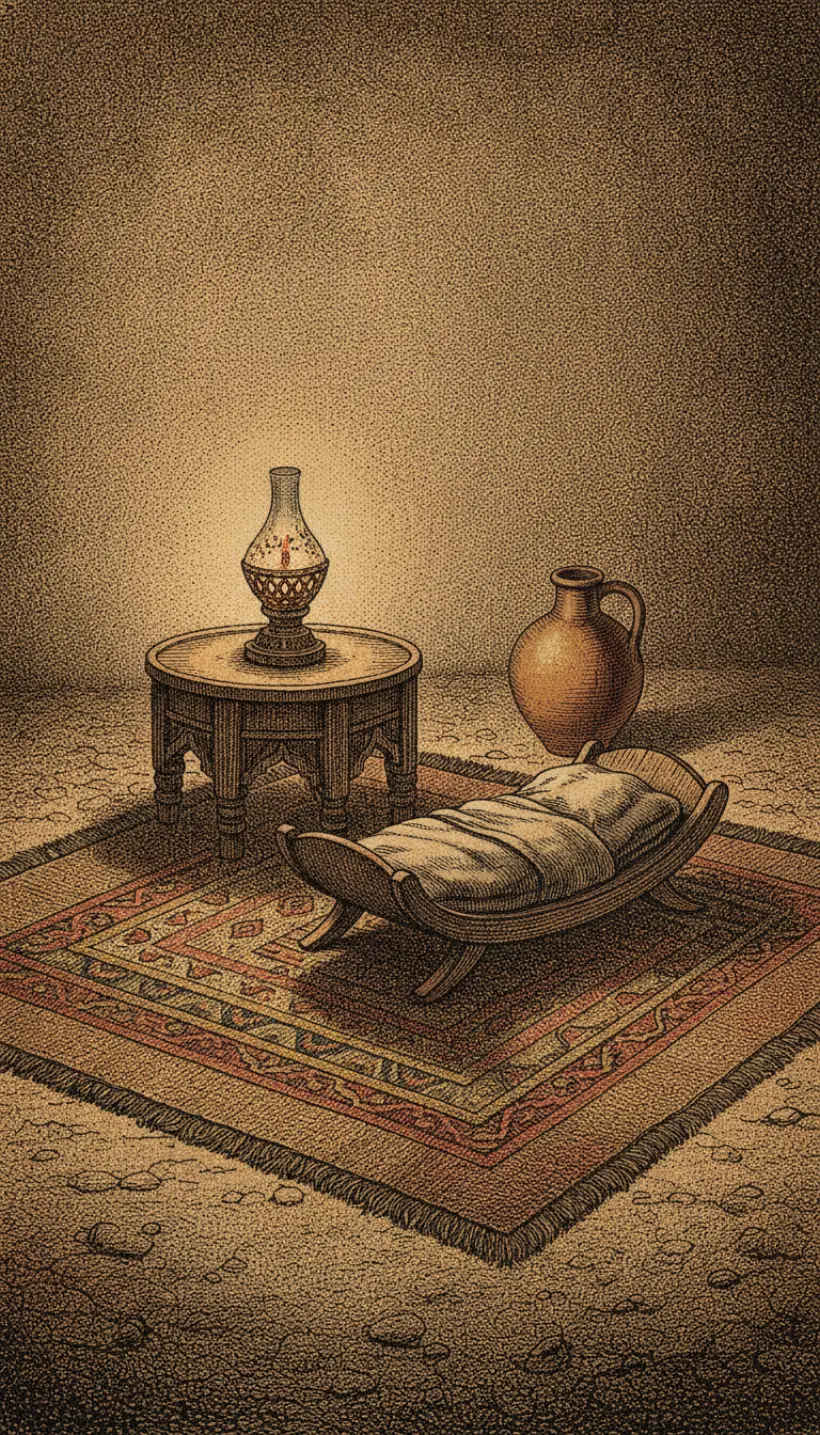
Her name was Barakah. The biographers describe her as an Abyssinian woman in the household of Abdullah ibn Abd al-Muttalib — the Prophet's father — who died before his son was born. When Aminah died a few years later on the road home from Yathrib, the boy was about six years old and had no parents left at all.
Barakah stayed. He would later call her by the name history remembers: Umm Ayman.
What is certain, and what is only reported
It is worth being precise about how much weight each detail carries. The texture of her life — Abyssinian, part of Abdullah's household, freed by the Prophet ﷺ around the time of his marriage — comes from the biographical literature (Ibn Sa'd, Ibn Abd al-Barr, Ibn al-Athir, al-Dhahabi), not from the Sahih collections.
What is in Sahih al-Bukhari (3737) is the part that matters most: that Umm Ayman was among those who nursed and raised the Prophet ﷺ, and that his affection extended to her descendants — Ibn Umar (ra), seeing her grandson years later, remarked that if the Messenger of Allah ﷺ had seen him, he would have loved him.
She was freed. She married Ubayd of the Khazraj and bore a son, Ayman — which is where her name comes from. Later she married Zayd ibn Haritha (ra), and their son was Usama ibn Zayd (ra), the young commander the Prophet ﷺ loved; Usama's parentage is recorded in both Sahih collections. She migrated to Abyssinia, and she migrated to Madinah. Whatever the community paid, she paid.
The visit after the funeral
When the Prophet ﷺ died, Abu Bakr (ra) said to Umar (ra): let us go and visit Umm Ayman, as the Messenger of Allah ﷺ used to visit her. Read that again — the reason they went was that he used to go. Calling on her had been one of his habits, all the way from Makkah to the end.
When they arrived, she wept. They tried to comfort her: what is with Allah is better for His Messenger than this world. She answered that she knew that perfectly well, and it was not why she was crying. She was crying because the revelation from heaven had ceased. And the two of them wept with her.
That report is in Sahih Muslim (2454). An elderly freedwoman, in one sentence, named the loss that the two most senior men in the community had not yet let themselves say out loud — and they broke down with her.
What we deliberately left out
Umm Ayman's story is usually told with two famous flourishes: a saying that she was “my mother after my mother,” and a miracle of water sent down from heaven when she was thirsty on the road. Both are widely repeated, and both are graded weak by hadith scholars — the first as a broken (mursal) report, the second as disconnected. So we left them out of the film, and we are leaving them out here.
Her story does not need them. A woman with no status in Makkah raised an orphan who became a Prophet, kept his household, migrated twice, and was still being visited by the leaders of the Muslim community after his death. Every load-bearing beat of that stands on sound reports alone.
For another woman whose courage the Sīrah records plainly, read about Umm Salamah (ra), whose family was torn three ways on the road to Madinah → or about Khadija (ra), the first to believe →
Watch the story
Sources: Umm Ayman as one of those who nursed and raised the Prophet ﷺ, and his love for her descendants — Sahih al-Bukhari 3737. Abu Bakr and Umar's visit and her words about revelation ceasing — Sahih Muslim 2454. Usama ibn Zayd's parentage — the Sahih collections. Her Abyssinian origin, her place in Abdullah's household, her manumission and her two marriages — the biographical literature (Ibn Sa'd al-Tabaqat, Ibn Abd al-Barr al-Isti'ab, Ibn al-Athir Usd al-Ghaba, al-Dhahabi Siyar), not the Sahih collections. Deliberately omitted as weak: the “my mother after my mother” saying and the thirst miracle. Honorifics: ﷺ “peace be upon him,” (ra) “may Allah be pleased with her/him.”
Learn the people of the Sirah — a little every day
Umm Ayman is one of dozens of companions you'll meet in Sirah Quest: 78 chapters, short daily lessons, in English, Arabic, and French. Free to start.