Sirah Stories · The Hijra
Umm Salamah (ra): They Tore Her Family in Three
In a single morning one clan seized the wife, another clan took the baby, and the husband was forced to ride for Madinah alone. What she did next took nearly a year — and then a desert crossing.
Sirah Stories · 26 July 2026
Umm Salamah — Hind bint Abi Umayyah (ra) — was born into one of the proudest houses of Makkah. She and her husband, Abu Salamah (ra), were among the earliest to accept Islam and among the first to pay for it: they had already migrated once, to Abyssinia. When the road to Madinah opened, they packed again. They never arrived together.
A family broken in one morning
He seated her on the camel with their little son Salamah in her arms and led them out of Makkah. Before they had cleared the town, her own clan — Banu al-Mughira — stopped the camel and took her back: they would not have a daughter of theirs carried off into the desert. Then her husband's clan, Banu Abd al-Asad, came and claimed the child as theirs. The books of Sīrah relate that the boy was pulled between the two families until his arm was wrenched from its socket.
Three pieces, in the time it takes the sun to clear the hills. The mother with one clan. The son with another. The father on the road to Madinah alone, because there was nothing left in Makkah to stay for.
The year in the valley
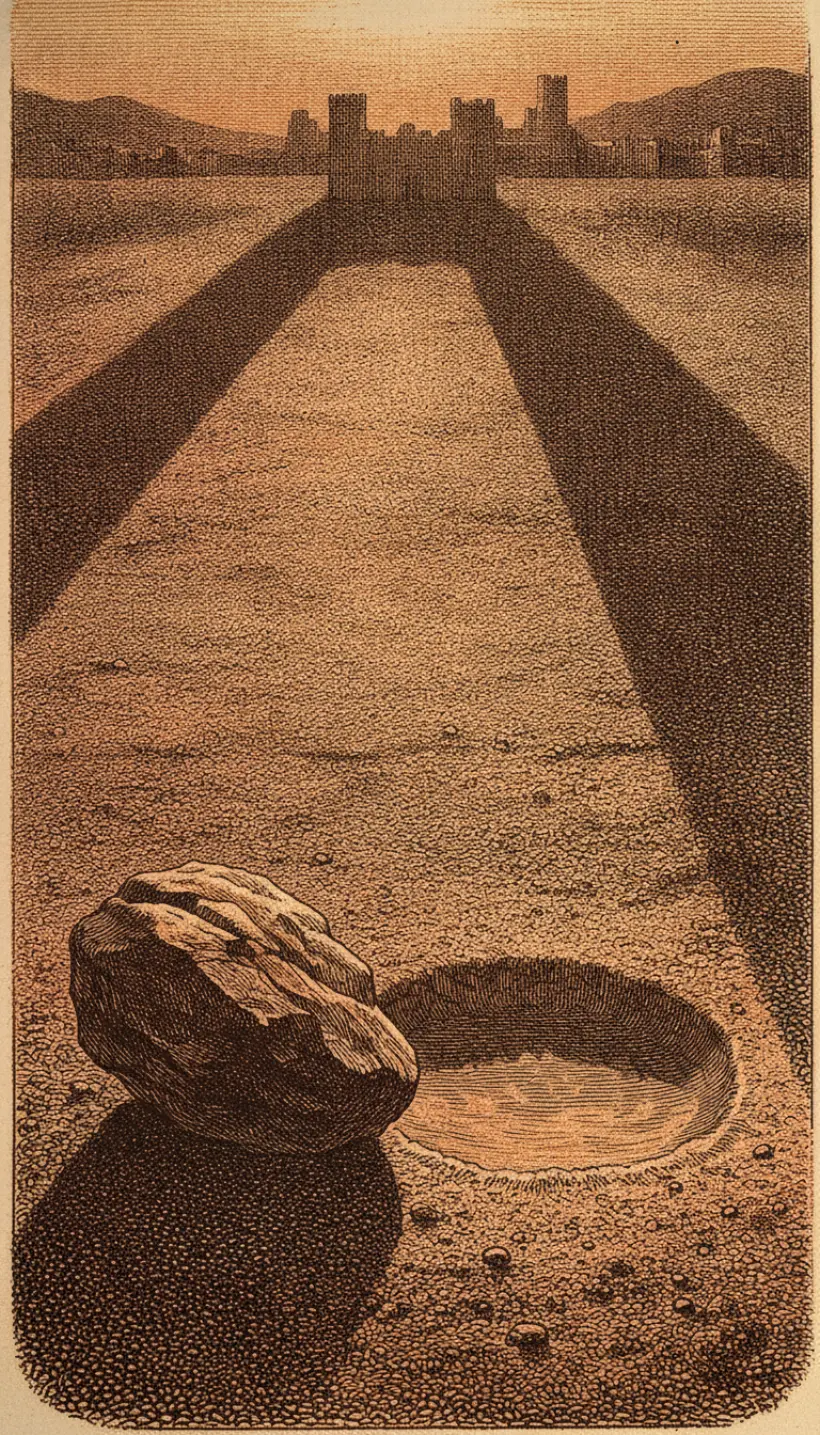
The Sīrah records that for nearly a year she walked out to al-Abtah, the open valley at the edge of Makkah, sat down, and cried until nightfall — then went home and did it again the next morning. She did not stage a rebellion and she did not go quiet. She simply refused to let her grief become invisible.
In the end it was one of her own cousins who broke. Seeing her out there again, he turned on her clan: will you not let this poor woman go? They released her, and Banu Abd al-Asad gave her back her son.
The crossing
Then she did the thing nobody expected. She put Salamah in her lap, mounted the camel, and set out for Madinah across open desert with no one beside her.
At Tan'im, just outside Makkah, she was met by Uthman ibn Talha — at that time still an opponent of the new faith. When he learned where she was going he took the camel's halter and walked it the whole way, camping apart from her each night out of respect, until he brought her within sight of Quba. Then he turned back to Makkah. She would say afterwards that she had never known a nobler travelling companion.
The voice they should have listened to
Abu Salamah later died of a wound taken at Uhud. Umm Salamah said the words the Prophet ﷺ had taught for a moment of loss — “O Allah, reward me in my affliction and give me something better in its place” — and she admitted she could not imagine who could be better than Abu Salamah. She was later married to the Messenger of Allah ﷺ himself. She narrates this herself in Sahih Muslim (918).
And years afterwards, at al-Hudaybiyyah, the treaty was written on terms the companions found bitter. The Prophet ﷺ told them to slaughter their sacrificial animals and shave their heads. Not one man moved. He came into the tent troubled and told Umm Salamah. Her counsel was simple: go out, say nothing to anybody, slaughter your own animal and call your barber. He did — and the moment the camp saw it, every man rose and followed. That exchange is recorded in Sahih al-Bukhari (2731–2732).
The woman they had torn away from her family became a Mother of the Believers and one of the wisest voices in Islam. She is not the only woman who carried the Hijra on her back — read about Asma bint Abi Bakr (ra), “She of the Two Belts” → or about Umm Ayman (ra), the freedwoman who raised an orphan Prophet →
Watch the story
Sources: The separation at Makkah, the year in the valley, and the journey escorted by Uthman ibn Talha — the Sīrah literature (Ibn Ishaq / Ibn Hisham); these are well-attested sīrah reports, not hadith of the Sahih collections. The supplication after Abu Salamah's death — Sahih Muslim 918. Her counsel at al-Hudaybiyyah — Sahih al-Bukhari 2731–2732. No dialogue has been invented; where the Sīrah gives words, they are paraphrased. Honorifics: ﷺ “peace be upon him,” (ra) “may Allah be pleased with her/him.” Uthman ibn Talha is named without an honorific because at that point in the story he had not yet accepted Islam.
Learn the people of the Sirah — a little every day
Umm Salamah is one of dozens of companions you'll meet in Sirah Quest: 78 chapters, short daily lessons, in English, Arabic, and French. Free to start.