Sirah Stories · The Migration to Abyssinia
Jaʿfar Before the Negus: The Christian King Who Wept
A group of refugees stood in a foreign court, and the choice put to them was simple: satisfy the king, or be handed back to the men who had driven them out.
Sirah Stories · 26 July 2026
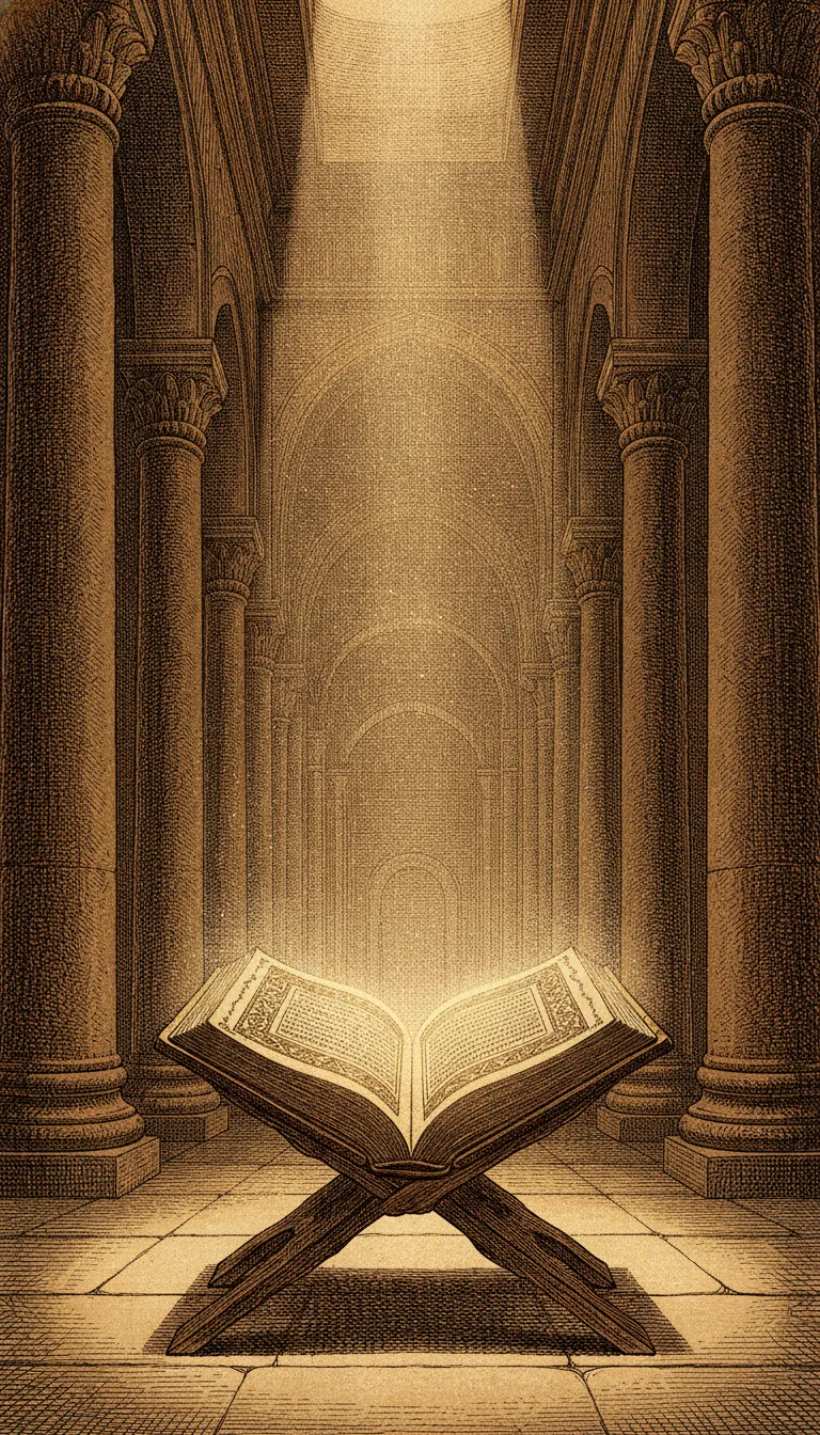
Before Madinah, before the Hijra everyone remembers, there was a smaller and more desperate migration. The persecution in Makkah had become unbearable for the weakest of the early Muslims, and the Prophet ﷺ directed a group of them to cross the sea to Abyssinia, where — he told them — there was a king under whom no one was wronged.
A first small group went. Later a larger party followed, and among them was Jaʿfar ibn Abi Talib (ra), the Prophet's ﷺ cousin and the elder brother of Ali (ra).
Quraysh sent gifts
Makkah did not let them go. The Sirah relates that Quraysh dispatched two envoys — ʿAmr ibn al-ʿAs and ʿAbdullah ibn Abi Rabiʿah, both still opponents of Islam at the time — loaded with the leather goods the Abyssinian court prized, to buy the refugees back. Their case to the Negus was that these were young fools who had abandoned the religion of their people and invented something new.
The Negus did what the envoys had hoped he would not: he summoned the accused and let them answer.
“What is this religion of yours?”
Jaʿfar (ra) spoke for them. The account we have comes from Umm Salamah (ra), who was there — she narrated it, and it is preserved in Ibn Ishaq's Sirah (transmitted by Ibn Hisham) and in Musnad Ahmad (22498), where the hadith scholar Shuʿayb al-Arnaʾut graded its chain hasan.
He did not begin with theology. He began with a description of the life they had left: a people of ignorance who worshipped idols, ate carrion, committed shameful deeds, cut off their kin and mistreated their neighbours — the strong among them devouring the weak. Then, he said, Allah raised among them a man they knew, whose lineage, truthfulness and trustworthiness they knew, and he called them to worship Allah alone, to speak truth, to return what was entrusted to them, to keep family ties and be good neighbours, to leave what was forbidden and to stop shedding blood. And for that, he said, our own people turned on us — so we came to your land, and chose you over anyone else, hoping not to be wronged here.
Surah Maryam, and a king in tears
The Negus asked whether he had with him anything of what had come from God. Jaʿfar (ra) recited the opening of Surah Maryam — the Qur'an's account of Zachariah, of Mary, and of the birth of Jesus, peace be upon them.
Umm Salamah's (ra) narration says the Negus wept until his beard was wet, and the bishops around him wept until their scrolls were wet. He told the envoys that this and what Jesus brought came from a single source. He returned their gifts and refused to hand over a single one of the Muslims.
The Negus is not given an Islamic honorific here; at that moment he was a Christian king who did a just thing. Later, when he died, the Prophet ﷺ announced his death in Madinah on the day it happened and led the prayer for him — recorded in Sahih al-Bukhari (1245).
The banner at Muʾtah
Jaʿfar (ra) eventually returned to the Muslims at Madinah, and in the year 8 AH he rode out to Muʾtah as second-in-command. Ibn ʿUmar (ra) reported that after the battle they searched for his body among the fallen and found more than ninety wounds on it — Sahih al-Bukhari (4261). He had carried the banner until he could not.
He is remembered as Dhu'l-Janahayn, “the one with two wings”: Sahih al-Bukhari (3709) records that Ibn ʿUmar (ra) would greet Jaʿfar's son with “Peace be upon you, O son of the one with two wings.” The report that Allah gave him two wings to fly with in Paradise is related in the Sunan literature (Jami' at-Tirmidhi) rather than in the two Sahihs.
The man who once had no weapon but the truth, spoken plainly in a foreign court, ended holding a banner he would not drop. Read about the Makkans they left that persecution for →
Watch the 90-second story
Sources: The migration to Abyssinia, the Quraysh envoys, Jaʿfar's (ra) speech, the recitation of Surah Maryam and the Negus's weeping — the narration of Umm Salamah (ra), preserved in Ibn Ishaq's Sirat Rasul Allah (transmitted by Ibn Hisham) and in Musnad Ahmad 22498, graded hasan by Shuʿayb al-Arnaʾut. The Prophet's ﷺ announcement of the Negus's death and the prayer for him — Sahih al-Bukhari 1245. Jaʿfar's (ra) death at Muʾtah and the wounds counted on his body — Sahih al-Bukhari 4261. The title “son of the one with two wings” — Sahih al-Bukhari 3709; the report of the two wings in Paradise itself is in the Sunan literature (Jami' at-Tirmidhi), not the two Sahihs. Honorifics: ﷺ “peace be upon him,” (ra) “may Allah be pleased with him/her.” The Negus, as a non-Muslim figure in the account, is given none.
Meet the companions — a little every day
Jaʿfar (ra) is one of dozens of companions you'll meet in Sirah Quest: 78 chapters, short daily lessons, in English, Arabic, and French. Free to start.