
Sirah Stories · New Year
Why the Islamic year begins with the Hijra
Not the Prophet's ﷺ birth. Not the first revelation. Not a great victory. The Muslim calendar counts its years from the migration — and that choice carries a lesson.
Sirah Stories · 16 June 2026
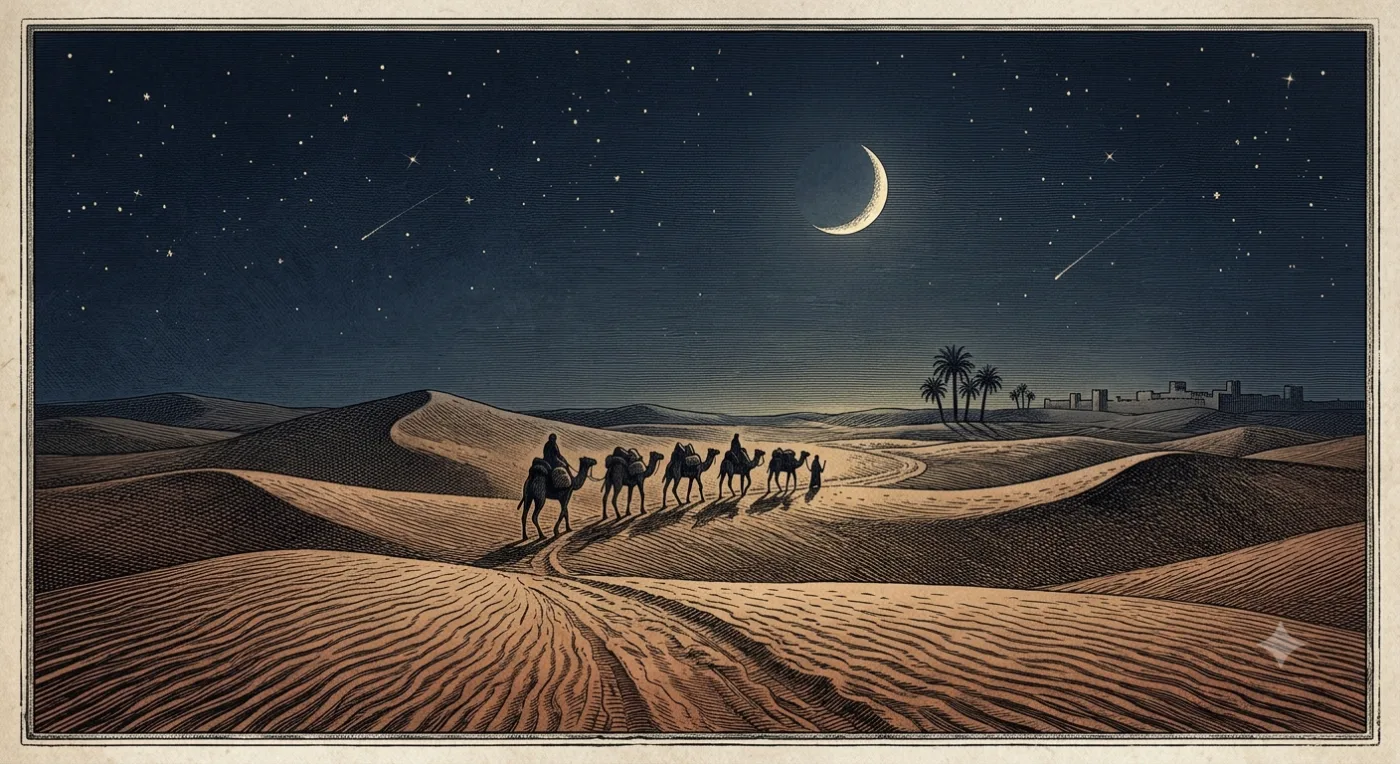
Every Muharram, Muslims greet a new year — 1448, 1449, and so on. But have you ever asked: 1448 years since what?
The answer is not the Prophet's ﷺ birth, nor the first revelation in the cave of Hira, nor any battle. The Islamic year counts from the Hijra: the migration of the Prophet ﷺ and the believers from Makkah to Madinah.
How the calendar began
In the Prophet's ﷺ own lifetime there was no numbered year system. The calendar was organised later, during the caliphate of ʿUmar ibn al-Khattab (ra), roughly a decade and a half after the Hijra, when the growing state needed a consistent way to date letters and records.
ʿUmar gathered the companions and consulted them. Several starting points were suggested — including the Prophet's ﷺ birth and his passing. The choice that was agreed upon was the Hijra, and the year was set to begin with the month of Muharram.
Why the migration, of all moments?
Because the Hijra was the turning point. In Makkah the believers were a persecuted minority. After the migration, they became a community — with a mosque, mutual responsibility, and a shared life. The Hijra is where Islam moved from private conviction to a society that could carry it forward.
There is wisdom in that. The calendar doesn't honour a person or a victory; it honours a decision to move toward what is right, even at great cost. Every year, its very number reminds us of that step.
How to welcome the new year
The truest celebration isn't only a greeting. It's reflection on what the Hijra teaches — faith, planning, trust, and sacrifice — and a small, real intention for the year ahead. A new year is an invitation to a personal hijra: to migrate, even a little, toward better habits and deeper knowledge.
One simple intention you can keep: learn the Prophet's ﷺ life, a little every day. See how the Hijra itself was planned →
Sources: The establishment of the Hijri calendar under ʿUmar ibn al-Khattab (ra) is recorded in the classical histories and hadith collections (e.g. al-Bukhari's chapters on the dating of the Hijra). We keep the account to what these sources agree on. Honorific: ﷺ “peace be upon him,” (ra) “may Allah be pleased with him.”
Start your year with the Sirah
78 chapters of the Prophet's ﷺ life, in short daily lessons — English, Arabic, and French. Free to start.